September 11th: One Generation Later

Typically, one generation is about 25 years. Such has been the exact amount of time that has passed since America’s darkest day, the September 11th, 2001 terrorist attacks. There is not a single American in their early 20s who has not heard at least one “I remember where I was on 9/11” story from an adult they knew growing up, be it their parents, teachers, or maybe an older coworker. Today, Americans across the country commemorate that day, and this essay is dedicated to all 2,977 Americans who lost their lives in the attacks and the thousands of firefighters, police, and emergency response personnel who gave their service in its wake.
The September 11th attacks were taught in school, made into documentaries, and detailed into United States history textbooks with every shred of infamy and horror that can be possibly conceived of. Sadly, the fires of that wretched day may be nothing more than second-hand smoke to the young adults of today.
On the morning of Tuesday, September 11th, 2001, as Americans began their day, 19 of the human race’s abominations, soulless and hellbent on inflicting the maximum possible damage, divided into groups and hijacked four airplanes. Two of those airplanes each crashed into the North and South Twin Towers of the World Trade Center in New York City; another hit the Pentagon in Arlington, Virginia; the last crashed in a field in Pennsylvania after defenseless passengers heroically retook control of the aircraft and did all they could to minimize any casualties outside of the airplane. Among all four planes that were weaponized that day, there were no survivors.

The total death toll was 2,977, nearly 3,000 innocent lives lost. Of New York, 2,753 including the occupants of the Twin Towers (2606), the captains and first officers of the planes, crew, and passengers of American Airlines 11 and United Airlines 175 (147 total). In Virginia, there were 184 casualties, which include Pentagon personnel (120) and those aboard American Airlines 77 (64). Finally, the thwarted hijacking that was taken down in Shanksville, Pennsylvania resulted in the deaths of all 40 people aboard the plane.
The immediate aftermath of the September 11th attacks was also devastating:
“When the Twin Towers collapsed, lower Manhattan and the surrounding area was covered by an enormous cloud of dust. This dust lingered in the air for many months after 9/11. Analysis of the air found concrete, insulation, jet fuel, electrical and computer equipment, glass particles, and plastics that had been pulverized. This air was unsafe to breathe. It’s estimated that more than 400,000 people were exposed to this air. This includes those who worked at Ground Zero, survivors, and those who lived and went to school nearby. Over time, many would be diagnosed with respiratory issues and chronic illnesses. Today more than 80,000 people are known to be suffering from 9/11-related illnesses including lung diseases, mental health issues, and over 50 types of cancer. Thousands have died and these numbers continue to rise.”
In the months and years following 9/11, nearly half a million people who were not murdered at Ground Zero in New York City came down with illnesses from being near the site of the attack, and many have died from these illnesses.
The attacks were perpetrated by members of the Al-Qaeda terrorist group, an infestation of Islamic extremists founded by Osama bin Laden, a Saudi Arabian of considerable wealth who was eliminated by the United States military in May of 2011, just under ten years after 9/11. Fifteen of the nineteen terrorists who carried out the attacks, like bin Laden, were Saudi Arabian, two were Emirati, one was Lebanese, and one was Egyptian. Osama bin Laden himself did not participate in the attacks. But bin Laden and the terrorists all had the same goal: the destruction of the United States and the Western world.
25 years later, one question troubles me: has too much time passed between then and now that it has rendered these events too distant and irrelevant?
Some Statistics
This particular group of Americans have an interesting relationship with the September 11 attacks. All of Gen-Z were either still in diapers or not even born at the time. They are not attached to 9/11 through memory; they know it via the historical record. Their only knowledge of 9/11 is secondary. This means that the impact it has is not quite the same as even people who were young children on September 11th, 2001. Hearing about the attacks from the perspective of parents, teachers, other adults they come across as well as pictures, movies, and the internet dulls the shock, horror, and grief that was felt by those who actually lived through it. Therein lies the problem: Gen-Z is too removed from the event, even though a selection of the oldest among them were actually alive when it happened.
While this is an overall generalization based on observation, support for this claim can be found in an August 2026 YouGov survey of nearly 2,000 adults. Of those surveyed, 54% believed that Americans born after the year 2001 “do not have a good understanding”, compared to less than a quarter who believed they do. Some other notable statistics in the survey:
34% believed that schools should not be legally required to hold a moment of silence to observe anniversaries of the September 11 attacks.
26% do not believe that it should be a national holiday to commemorate the attacks.
23% believe that the Twin Towers fell in a controlled demolition.
As disclaimer, this was a very small survey pool. It may not be safe to assume that these percentages are transferrable to the rest of the 18-24 year old population but from these statistics alone, two things are clear. First, among the age group in the survey pool, 9/11 is not unanimously agreed to be important enough to warrant some sort of national solidarity on its anniversaries, whether in schools or across the country. Second, even against video and photographic evidence, some are of the belief that it was not two airplanes that brought down the twin towers.
Even if you ONLY account for the number of survey participants, even if you ONLY account for those only in that age group, these beliefs are still incredibly alarming. What does that say about the emotional maturity and critical thinking of these survey takers? How likely is it that if the survey was distributed to every American within the age group, and even for those who are just a couple of years older, that the shared sentiments would be remarkably prevalent in the statistics?
That is the concern. If this survey only shows a percentage of a percentage, what is the implication for a larger pool?
Among Gen-Z, September 11th will never be an “I remember where I was when it happened”, but rather an “I remember what grade I was in when I learned about it.” That’s not the issue. The issue is how many can say “I don’t see 9/11 as something serious.”
Growing Up in War's Shadow
After September 11, the United States rightfully sought justice. The most powerful country on Earth was not going to shy away from exacting revenge.
First came Afghanistan. This is where Al-Qaeda originated and where another terrorist organization, the Taliban, spawned as well and sheltered Al-Qaeda members. America demanded that every last militant and leader, including bin Laden himself, be handed over.

Obviously, this wasn’t going to happen. So we invaded Iraq in October 2001 in a military campaign known as Operation Enduring Freedom. The war lasted 20 years, ending with United States President Joe Biden announcing total withdrawal from Afghanistan. The withdrawal was disastrous, as the war came to a close with a series of “mistakes” and the deaths of 13 U.S. service members. Kabul, Afghanistan’s capital, fell to the Taliban.
Under the controversial, alleged threat of weapons of mass destruction, the United States also went to war against Iraq in March 2003. The war in Iraq was a follow-up. Iraq had no connections to 9/11, but Saddam Hussein’s invasion of Kuwait a decade earlier and the subsequent Gulf War, which did not result in his defeat, led the United States under President George Bush’s administration in pursuit of taking care of “unfinished business”. While the Iraqis did have some level of contact with Al-Qaeda and some connections to terrorists, the United States has “seen no evidence that these…ever developed into a collaborative operational relationship. Nor have we seen evidence indicating that Iraq cooperated with al Qaeda in developing or carrying out any attacks against the United States.” While there are secondary reasons for the invasion of Iraq, the substance of it comes down to wanting Saddam Hussein disposed and the fear of leaving hostile regimes in place to maintain their power.
All of the younger generation of Americans, now in their teenage years and mid-20s, came to age in both of the conflicts. They would have grown up hearing news about the wars, knowing veterans, having family members who were deployed, and maybe even taken an interest as they got older due to an affinity for politics and foreign affairs. But what’s intriguing is the narratives they were surrounded with and came to believe. While every American of every age has varying levels of understanding and beliefs, there are two striking opinions: the idea that the United States went to war with Iraq for oil acquisition under the guise of fear of WMD, and that the invasion was a campaign of conquest and expansionism.
In 2005, CBS conducted a poll of 14-24 year olds (who would now be in their 30s and 40s now) about the government, economy, and the Iraq war. Among the 600+ young Americans who took the survey, 26% believed that the United States went to war with Iraq to obtain oil. This was the most common answer for that question in the poll.
Let’s focus on this premise for a second. It must be said that the small fraction of young Americans surveyed does not and cannot represent all Americans in that age group at that time. However, more than a quarter of that pool believed that the overall purpose of the Iraq war was to tap into Iraq’s enormous oil reserves. This, again, begs the question of how many Americans in that age group who were not surveyed share that belief? The answer cannot definitely be known, but the results of the poll indicate that the belief was already conspicuous in the beginning of the war. The poll also does not take into account the next decade of young Americans (who would have been children at the time the poll was conducted and entered their teenage years in the middle of the war) who would grow up absorbing that narrative and very likely adding to the total number of young Americans who believed that America went to war with Iraq for oil. The next generation to come of age did not simply come across that belief; it was almost a default setting and shaped their perspective of the Iraq war. The most consequential attribute of the age group of the poll-takers (not the poll-takers themselves) is that they were the next age set of Americans to not only shape the culture of the internet but also have a prominent voice in political discourse, allowing for the “Iraq War for oil” explanation to proliferate.
It’s not a secret that America doesn’t have the cleanest history. But was the war in Iraq one of deliberate conquest and expansion? There seems to be a widespread misconception that the United States was an exploitative force keen to influence the Middle East in an imperialist campaign. This is a viewpoint that can be dismantled, but only after examining the lens through which adherents to this belief view the conflict.
America was very clear with its vow to overthrow Saddam Hussein and bring regime change to Iraq. We fulfilled this promise, as Hussein was captured in 2003, put on trial, and executed in 2006. But when we finally reached our goal in Iraq, that wasn’t the end of it. The United States maintained a military presence for nearly a decade after. A regime change and prolonged military presence eventually abruptly became occupation as America took considerable interest in how the new Iraqi government would be formed and sustained throughout its tenure abroad.
In a way, it becomes understandable how the interpretation that America was a colonialist, expansionist, imperialist, whatever-else-ist force in the Middle East could manifest itself. But what’s important is viewing the conflict in Iraq, whether the verdict is that it was justifiable or not, as part of a broader aim: the United States cannot allow hostile national governments to expand. There is not a single distinct reason behind the Iraqi war. It was a multitude of factors, and going over to raise hell wasn’t one of them. The bottom line is that Iraq, as a hostile regime, could not be allowed the opportunity to acquire weapons or make concrete plans that would hurt Americans the way 9/11 did, regardless of whether it intended to.
Young adults who were born just before or during both conflicts would have grown up seeing the wars in Afghanistan and Iraq as perpetual aspects of United States foreign policy. It is not a wonder that they then would not be able to hold a personal relationship between the 9/11, the War on Terror, and the actual “forever wars” fought in the Middle East, since the foundation of their impression would simply be that the wars were fought for as long or nearly as long as they had been alive. But that does not mean that the idea that the United States held a military occupation in Iraq to expand its influence is correct. The truth of the matter is, no matter what excuse the United States gave behind its invasion, there was a verifiable worry that Afghanistan was not the only entity seeking America’s destruction.
9/11 and Internet Culture
The internet is a whole other dimension. Rules of civil society generally do not apply. Even with content moderation, platform policies, and actual laws, things slip through the cracks of regulation. There is no such thing as sanctity when it comes to internet culture. The September 11th attacks are, unfortunately, subject to this phenomenon.
9/11 pushes and shoves its way through every corner of the internet. Memes about the Twin Towers and bin Laden. Jokes about the attacks. Stand-up comedians and internet personalities perverting the tragedy for dark humor. September 11th is an industrial complex, a permanent punchline, across the board.
For the record, I am not making the claim that those who make light of the situation are bad, evil people who have no regard for the lives that were lost or changed because of 9/11. I recognize that dark humor has been used throughout the history of time to process such horrid events. What I am asking is where does the line between the gravity of the situation and the acceptability of humor begin to blur, or disappear altogether? Is it when time naturally leads the way, or when society collectively agrees that it’s no longer important to preserve the memory through despair?
Within the realm of internet culture, the September 11th attacks have fallen victim to many a conspiracy theory. These claims are preposterous, outlandish, and sometimes villainizing, depending on who — or what — the conspiracy theories blame. Because of the plethora of theories cascading through the web, only a handful can be given adequate attention and time spent debunking them.
One of the most prominent of these is the belief that Israel or the Mossad were behind 9/11. This claim is untrue. First of all, Al-Qaeda explicitly claimed responsibility for the 9/11 attacks. They are a terrorist organization do not shy away from spewing their hatred for the United States, Israel, and the western world. Israel is an ally of the United States and is the only country outside of America to have a memorial to honor the victims murdered in the attacks. How does that make sense? Where is the logic in Israel being behind the attacks and Al-Qaeda taking the blame? Also, it is widely regarded that the first victim of 9/11 was Daniel Lewin, an Israeli-American IDF soldier traveling for business on flight 11 who was stabbed by a terrorist, likely while he was trying to stop the hijacking. If Israel was really targeting the United States, AND they planned the whole thing, AND they were all-knowing, AND they knew Daniel Lewin would be on the flight, why would they carry out the attack anyway knowing that one of their own would be sent to his death? The idea that this fact may be a cover-up or a feature of Israel’s attempt at covertly carrying out 9/11 requires advanced mental gymnastics. Furthermore, Mossad is an intelligence agency that orchestrates and executes operations as a response to threats to the state of Israel. The nature of these operations are usually covert and designed to minimize civilian casualties, though there have been times when this was not always possible. It does not fit Mossad’s methodology to carry out an interstate attack using airplanes that killed only civilians on an ally that posed no credible threat. Lastly, had Israel wanted to manufacture a war on one of its Muslim adversaries, as some claim, why jeopardize its relationship with its strongest ally by sacrificing 3,000 of its citizens? Is “big, bad” Israel not capable of going to war on their own, or are they interested in augmenting damage elsewhere to avoid the consequences? Anyone who believes conspiracy theories that Israel or Mossad were the true perpetrators of 9/11 is nothing short of intellectually deficient.

Another theory, probably even more widely believed than the Israel/Mossad nonsense, is that September 11th was an inside job, whereby President George Bush and his administration orchestrated the attacks, or there was knowledge of the attack beforehand that was willfully ignored. The problem with the first part of the theory is not that President Bush or his administration wouldn’t do something like that; the problem is that it doesn’t explain why there was a plan being formulated to tackle Al-Qaeda only for President Bush to—at the same time—utilize Al-Qaeda to attack the United States. There is no logic to the strategy that would have been implemented to eliminate Al-Qaeda being subdued by President Bush’s utilization of the terrorists to carry out September 11th.
This doesn’t mean that there weren’t warning signs. But here’s what’s important: knowing that something is going to happen is not the same thing as knowing what is going to happen, or when, or how. The same 9/11 Commission Report Executive Summary that details the strategy to take down Al-Qaeda concedes that there were warnings that Al-Qaeda was, in fact, conspiring against the United States. A presidential briefing just a month prior outwardly indicated that “bin Laden was determined to strike in the United States”, but the “threat information pointed overseas”. There is no viable excuse as to why these warnings were not taken seriously. It’s not as if the United States hadn’t been a target for terror before, or were there no plots that had been foiled and no terrorists arrested prior to 9/11. The issue comes down to the intelligence, strategic, and cooperative failures that resulted in Al-Qaeda’s success. So, while it would be erroneous to assert that President Bush and his administration were the masterminds behind September 11th, the failure of the administration to sufficiently take measures to prevent the attacks is the truth.
The final conspiracy theory to be discussed is the belief that the World Trade Center fell as part of some controlled demolition plot. While the former two theories come from a place of hidden governmental schemes, this one is drawn out from questioning observable physical evidence. The significance of this theory concerns another building of the World Trade Center, Building 7. WTC 7 was not struck by an airplane, but it still collapsed. The conclusion that some have arrived at is that the World Trade Center buildings were not brought down by plane crashes and the subsequent catastrophes, but from deliberately-planted explosives within the buildings. A 3-year-long investigation was conducted by the National Institute of Standards and Technology (NIST), an independent scientific agency, who disclosed their findings in a report.
The collapse of WTC 7 came as a domino effect. As World Trade Center 1 collapsed, debris from the building ignited fires on the lower floors of WTC 7. This heat from uncontrolled fires, because the water supply aiding the sprinkler systems was damaged, “caused steel floor beams and girders to thermally expand”, so the framing within several floors of WTC 7 was severely damaged. As the heat expansion and fires progressed, a very important column, Column 79, on the 13th floor, “buckled,” which began a sequential structural failure down to the 5th floor. Floors that had collapsed from failed framing by the fires in proximity to Column 79 also left the column “insufficiently supported”. This progressed all the way to the top floors of WTC 7, and the building collapsed.
Conspiracy theorists point out that a video showing the collapse of WTC 7 looks like a free fall, unusually symmetrical. But that does not tell the whole story of what happened, which is that World Trade Center Building 7 fell in stages. The first stage was slower than free fall. The second stage happened at gravitational acceleration (free fall). The final stage was, again, slower than free fall. The total time it took for WTC 7 to collapse was 5.4 seconds, 40% longer than what conspiracy theorists claim it would have been at free fall, which is 3.9 seconds. So, there was a moment of free fall, but it was only one part of the entire collapse.
The same institution also concluded that there was no evidence of internal demolition. Planning ahead for such an event would require “walls and/or column enclosures and fireproofing…to be removed and replaced without being detected”, which is not a simple, unnoticeable task; it would have to be performed on practically every single column, not just one or a few. Additionally, the idea that thermite or thermate was used to ensure the collapse of WTC 7 is unsupported because NIST did not find any evidence that such material was used, and the amount that would have been needed to cause that level of damage to the building would not have been undetected prior to or on September 11th.
I acknowledge that a general rule of thumb for conspiracy theorists is that no amount of evidence will be enough. They will always attribute the facts and the entities who establish them to a part of some grand scheme for whatever it is they believe to be the case. Whatever. But I would leave this message with them: you can wear your tinfoil hat and shout your opinions into the void until you’re blue in the face, but don’t pretend you care about the lives that were lost on September 11, 2001 or that you have any regard for the truth.
It doesn’t matter who —or what— shaped the internet. What matters is the facts of 9/11 are well-established and well-documented. The internet has led a new generation to believe that opinions, or what they believe actually happened, outweigh the evidence and that their interpretation, not the factual account, is the correct one.
The New bin Laden Fan Club
In the more recent aftermath of 9/11 of these last 25 years, the adoration for Osama bin Laden, the attacks’ mastermind, has been the most troubling and left many dumbfounded.
Just after Hamas’s terrorist attack against Israel on October 7th, 2023, bin Laden’s “Letter to America” took TikTok by storm. Young left-leaning Americans found that the letter, which is nothing more than a manifesto for holy war against the West, to have resonated with them. Videos circulating on the platform consisted of an outpouring of affection and understanding for bin Laden’s words and grievances, consequences of the obsession with guilt and the interpretation of the West as the embodiment of oppression, colonialism, and world domination.
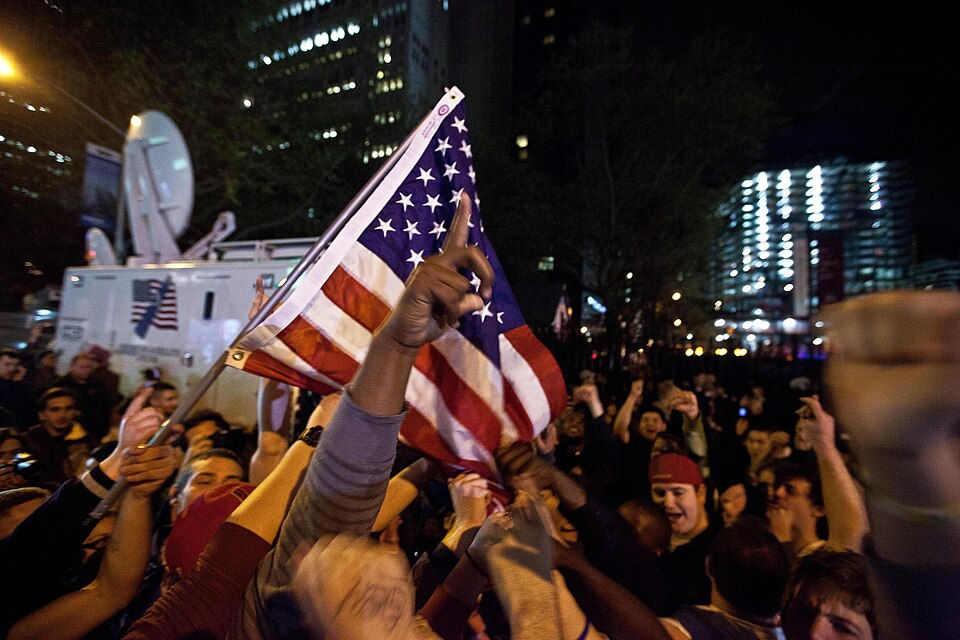
This viewpoint is held up by the framework of DEI, which forces its adherents to perceive the world in a narrow, binary lens of the oppressor-oppressed narrative. Bin Laden’s “Letter to America” lists a number of accusations; the American-Israeli alliance, the alleged subjugation of “Palestinians”, the war in Afghanistan…the list goes on. The letter follows a proclamation issued by Bin Laden the previous year in which he declares that the “war” against America instigated by the September 11th attacks is “fundamentally religious”. Bin Laden’s psychopathy and the younger left-wing American generation’s self-hating indoctrination created the perfect conditions for agreement, ultimately arguing that bin Laden “had a point”.
This is unacceptable. It is unconscionable that we have lost the plot so considerably that there is a new population of Americans who justify Islamic terrorism. It is morally reprehensible that, even if there were any legitimate claims decreed by Osama bin Laden at all, the ideology behind the September 11th attacks finds any refuge within American minds. For whatever flaws that America has (which are many), for whatever mistakes in foreign policy have been made (which are many), there will never be a good enough reason to vindicate the 2,977 lives lost on September 11th, 2001.
Lessons and Warnings
I know it’s been 25 years since September 11th, 2001. I know that while that 25 years is not a long time, it is enough time for the loss of historical immediacy to place itself front and center, creating a gap between the generation that remembers and the one that does not. This is a natural historic pattern, especially for a country as internationally promiscuous as America.
What needs to be forcefully carved into the psyche of every American, young and old, left-wing and right-wing, male and female is this: creating any alliance with Islam is a dangerous game. Allowing any segment of Islamist ideology to garner understanding or sympathy is an atrocity waiting to happen. It is a slap in the face to every single American citizen who lost a family member, friend, or coworker to even entertain the idea that there was any validity at all to the grievances cited by Osama bin Laden and avenged by his brain-washed, jihadist followers. Those of us who understand the gravity of the subject forbid the death of every American killed on September 11th to be in vain. Every dissident has the September 11th victims’ blood on their hands.