America’s Middle East Foreign Policy Is Garbage

The United States is a country worth loving and celebrating. Its founding principles, its history, and its culture deserve respect and reverence. Even through its dark moments and imperfections, the United States has much freedom and endless opportunity to offer. That’s why America’s involvement elsewhere matters and deserves scrutiny, and arguably nowhere more than the Middle East.
While the United States has a storied connection in every country within the region, most famously the so-called forever wars in Iraq and Afghanistan, significant developments in the Middle East have engendered new challenges, new questions, and new concerns.
I find four topics in particular to be the most important to examine: Syria, Qatar, Iran, and the Board of Peace. Each comes with old context and recent occurrences. It is absolutely imperative that attention is paid to these areas in particular, because it is my sincerest belief that the future of American foreign policy in the Middle East begins here. It is also where I think it is the most repugnant.
Syria

On Monday, August 24th, the United States formally removed Syria from the list of state sponsors of terrorism. This act, which is questionable at best and regrettable at worst, was thought to be “the last obstacle” that “would help reconnect Syria to the global financial and economic system and boost investment”, according to Asaad al-Shibani, Syria’s Foreign Minister.
This follows a series of steps taken by Washington to deepen ties with Damascus, which had an abrupt change in government at the end of 2024 when former president Bashar al-Assad was overthrown in a coup and fled to Russia. In July of last year, comprehensive economic sanctions were lifted off of Syria by U.S. President Trump’s administration, around the same time a 45-day congressional review began.
United States law has very clear criteria on what qualifies a country to be added, kept, and removed from the state sponsor of terrorism list. It is therefore the judgement of the American government that Syria no longer fits said criteria. Has Syria actually met the criteria for significantly long enough?
Regardless of the answer, the issue is that Syria is not completely out of the woods. So, the question is have these sanctions been lifted too soon?
It must be noted that there has been quasi-legitimate progress on Syria’s part. The most notable of these works has been diplomatic outreach to countries outside of Russia and Iran, which include the Arab world and Gulf States, the United States and Europe, and even Israel, its arch nemesis since the state was reestablished in 1948, as well as holding meetings with a number of representatives of the United Nations. Syria has also joined the Global Coalition against ISIS and has been working to form a unified military.
All of this looks good on paper, but so does any empty promise. These recent events are nothing short of shallow, and this claim is supported by two reasons.
First of all, to address the elephant in the room: Ahmed Al-Sharaa, previously known as Ahmed Al-Jolani, has an openly extensive background as a terrorist. His lengthy history of involvement with several designated terror groups seems to be overlooked by leaders of nations that have been in talks with Damascus over the last year and a half. It was actually Al-Sharaa’s terrorist training and network that allowed him to take control and topple the regime of Bashar Al-Assad, the previous president of Syria infamously known for his forces’ use of chemical weapons on the Syrian people during the country’s civil war. It is delusional to think that Al-Sharaa is fully reformed and is not anything less than a wolf in sheep’s clothing. It is apparent that Syria has just swapped out one villain for another.
Second, Syria’s historical and contemporary involvement with terrorism has not been laid to rest. ISIS has plenty of room to work within Syria. It has the capability to attack Syrian government officials and extort the fragility of Syrian society and economics. Other jihadist sentiments that lie within the Al-Qaeda fan club and Assadist die-hards actively remain threats to current hopes for Syria’s stability.
Aside from this conundrum, Syria needs to tend to the rights and status of its non-Muslim populations: Christians, Druze, Bedouins, Alawites, and Kurds. As abhorrent as the previous government and Muslims had acted towards these religious and ethnic minorities, Al-Sharaa’s tenure has yet to prove any different. These groups living within Syria remain targeted by the Muslim majority population. 25 Christians were killed and 63 injured in a suicide bombing that took place in a church in June 2025. Earlier, in March of that same year, Alawites were deliberately hunted and pillaged in the streets of Syria’s coastal towns. Although the new government under Al-Sharaa has promised rights for Syria’s marginalized communities, nothing concrete has been delivered. The exception lies with the Kurds of Syria, who have been decreed as equal citizens and given protection for their cultural and linguistic identity, though other grave concerns for the Kurdish community have not been systematically resolved.
Syria’s deep-rooted connections to terrorism via its president and its people, the remnants of Bashar Al-Assad’s regime, and sectarian violence create serious hindrances to Syria’s development. Its lack of stable institutions and weakened society after a 14-year-long civil war further exacerbate Syrian struggles. While lifting sanctions to jumpstart the economy and engaging in the international network creates an opportunity to emerge from the strife, the responsibility lies on Ahmed Al-Sharaa’s government to demonstrate his sincerity (if it exists, which is highly doubtful) by genuinely improving the conditions of the Syrian people and prove critics wrong. And it is the responsibility of his proponents to ensure that he does.
Qatar
Less noticeable than Syria, Qatar is no friend of the United States. The big reason?
Qatar has a rap sheet of openly hosting, funding, and endorsing terrorist organizations and their leaders, including the Taliban, Hamas, and the Muslim Brotherhood. Such a nuisance was this that even Saudi Arabia had to put its foot down. This is what Adel al-Jubeir, Minister of State for Foreign Affairs of Saudi Arabia, had to say in 2019:
“The Qataris since the mid-90’s have been sponsoring radicals. They have become a base for the leadership of the Muslim Brotherhood. The Qataris use their media platforms to spread hate. The Qataris allow their senior religious clerics to go on television and justify suicide bombings. That’s not acceptable. The Qataris harbor and shelter terrorists. That’s not acceptable. The Qataris are funding dissidents in the Emirates, Bahrain, and Saudi Arabia, and in Kuwait, in order to cause problems for those governments and to create instability…So in 2012, we [Saudi Arabia] cut off relations with them, and a year later they came back and agreed that they will end all of this nonsense. And they signed an agreement, and nothing happened. So, this time we said, ‘You know what? We’re not going to deal with you unless you change.’ Why do the Qataris get away with it?”
Evidently, this Gulf state has made enemies even among ethnic and religious kin by attempting to weaken their governments through financing belligerents who are intent on disturbing civil order and proliferating extremism.
Qatar’s relationship with harboring the Muslim Brotherhood begins as early as the 1950s, where the ideology of the group was given shelter to thrive. In 1999, Jordan, fed up for the same reasons as the Saudis, kicked out a handful of Hamas leaders who found refuge in Qatar. In 2013, Qatar hosted Taliban leadership in Doha for the purpose of mediation during the conflict with Afghanistan. Qatar’s relationship to leaders of terrorist organizations is alarmingly warmer than what any American should accept before fostering any sort of cooperation or alliance.

Taking this a step further, Essa bin Ahmad Al-Nassr, a representative of Qatar to the Arab Parliament (the legislative body of the Arab League), praised the October 7th, 2023 massacre that took place in Israel. That tragedy saw 46 American citizens murdered in the onslaught and 12 kidnapped and held hostage in Gaza. Al-Nassr’s words hold up a mirror to the Qataris and their true nature. As long as the misfortune happened to Israel, it matters not that Americans were affected.
The worry does not cease here. The Brandeis Center reported that a 2022 study found that Qatar donated $4.7 billion to American colleges and universities between 2001-2021; that’s more than any other country in the world. As of 2026, that number has jumped to $8.8 billion. Where exactly does that money come from, and what is it used for?
The funds are deployed by the Qatar Foundation (QFI), established by the Emir of Qatar in 1995 as an educational advancement and Arab cultural development initiative to promote and engage in international dialogue about global topics. Because of Qatar’s deep ties to Islamist politics, the influences of the Muslim Brotherhood run through the very foundation of the Qatari education system and therefore the Qatari Foundation itself.
According to documents disseminated by the Qatar Foundation itself, the organization has scaled its function to encompass nearly every aspect of education, including school curriculum, “professional development, and social activism initiatives”. QFI has deliberately concealed its agenda to control specific ideas and narratives about the Middle East, which it was able to do using “the credibility of trusted institutions and the opacity of much of its grantmaking.” It has also used proprietary materials to further these activities through sponsorships and educational workshops.
The Qatari Foundation is the manifestation of “civilizational jihad against Western society outlined by the Muslim Brotherhood decades ago, entrenching and embedding its influence within Western educational institutions to transform their narratives to align with the ideology of political Islam.” In other words, it’s an invasion of America’s institutions, culture, and principles constructed using linguistic and financial architecture perfectly manufactured to veil itself.
Having dirty Qatari money in our schools means they get to influence curriculums and teaching outcomes. It also means they have the ability to shape, warp, and distort the minds of impressionable college students.
Qatar openly hosts terrorists. Qatar has poured billions of dollars into American universities to influence academia for the sake of their foreign policy goals. Qatar finances global terrorism. So what, exactly, is the United States’ interest in doing any sort of business with them? For example, why would President Trump, though legally allowed to do so, accept a $400 million jet from Qatar, a country that the evidence clearly indicates does not have any real friendship with the country he was elected to serve?
Re-evaluating Washington’s relationship with Doha is critical. The future minds of America are being shaped with their money; it’s time that people started asking questions.
Iran
Taking first place in the news and popular concerns pertaining to foreign affairs is Iran. Such has been the case since June 2025, when the United States executed Operation Midnight Hammer in the Twelve-Day War, following Israel’s strikes on Iran’s nuclear and ballistic missile programs in their own Operation Rising Lion. The reprise was initiated earlier this year at the end of February, when the United States and Israel launched a coordinated joint military campaign on a military compound holding Iran’s senior political and military leadership, including the supreme leader Ayatollah Ali Khamenei, where he was killed by the strike.
Iran’s retaliation included not only Israel and United States military bases stationed throughout the Middle East, but also Gulf states: Saudi Arabia, the United Arab Emirates. Kuwait, Bahrain, and Qatar. Since then the Strait of Hormuz, a major commercial passageway previously controlled by Iran, has been the focal point throughout the conflict. Fighting continued after ceasefires and negotiations were initiated, ultimately coming to an end with the Memorandum of Understanding, an unfortunate document of capitulation to Iran. In a nutshell, it’s nothing short of the United States confessing its naïvety; Iran is going to keep its empty promises to do what we want if we give them what they want.
What exactly is the problem with the United States having gone to war against Iran in the first place? Critics of the war list their grievances as the increase in gas prices, fluctuations in the stock market, the undesirability of war itself, and, among Trump voters, the belief that he would not drag the country into another foreign war. Meme culture prematurely made the idea of World War III go viral, and I regretfully am inclined to believe this is not far from the near future.
The real issue is much deeper: the United States and the current administration are avoiding what it is actually going to cost to bring Iran to its knees. It’s not taking control of the Strait of Hormuz. It’s not dismantling nuclear and ballistic missile capabilities. The real cost is taking out the regime and overpowering the Islamic Revolutionary Guard Corps (IRGC).
The true loss of the war with Iran comes down to three specific attributes.
The first is the underestimation of the willingness and fear of the people to topple the regime. Just before the United States and Israel renewed strikes on Iran, the conditions for the regime to fall seemed ripe. Massive protests had taken place in January. Those who participated in the demonstrations lost their lives in the streets, and since then Iran has murdered and executed thousands of innocent people. Also, the Iranian economy had taken a huge hit when the value of the currency fell to nothing. These are two very dire circumstances where history suggests that change in the foundation and structure of a society appear to be imminent. This, unfortunately, was not the case in this particular instance. With the lives lost among the Iranian people, and the IRGC having doubled down on their brutality, the status quo remains exactly the same, if not worse. While the United States and Israel have successfully debilitated much of Iran’s power, the fate of the country itself and the power to change anything ultimately rests in the hands of its people.

The second factor is that the guaranteed successes of such actions can only be reinforced with a ground invasion; airstrikes and naval blockades can only go so far. That’s because the numbers of the Iranian Revolutionary Guard Corps need to be decimated in order for their power to be diminished. Therefore, only a catastrophe, something of immense detriment, can bring about that kind of change. Elica Lebon, an Iranian-born British lawyer, asks, “The question then becomes: who is willing to sign their name on that catastrophe?” The answer is very clearly not the United States. Between the financial costs, American soldiers inevitably losing their lives (18 U.S. service members have tragically fallen), and cultural backlash, our country is simply not ready to have that kind of weight on its shoulders. Israel, still recovering in the aftermath of October 7th, 2023 and the subsequent war, and still having its soldiers deployed elsewhere, has its hands tied. Its manpower is limited and its military capabilities are currently reserved for immediate threats. Neither country can expend the kind of force that would be necessary to endure the type of military campaign required to dismantle the regime from within.
The third and last aspect is the most expensive one: believing that the Iranian regime is a legitimate partner in negotiations; that there is something other than total world domination that they want which could be given with appropriate compromise; that they have legitimate interests for the benefit of the country that could be achieved; that appeasing them in some form or another would solve the problem. This is not the case. The Iranian regime is Islamist to its rotten core. These are people who have spent decades attempting to dismantle Western civilization, chanted “Death to America”, killed Americans, subdued their own people with brute force, and who abide by a “faith” that insists on nothing short of global subordination. They have spent billions of dollars creating a network of terror proxies, arming them, training them, paying them, and hosting them. These are not a people who are merely disgruntled with actions that America and some Western countries have taken and just want to hear “we’re sorry, let’s make this right” at a negotiating table. They want us dead. It’s that simple. And the mistake that has been made by President Trump, J.D. Vance, and relevant members is at best the failure to understand that, and at worst the willingness to ignore it.
The Board of Peace
October 7th, 2023. The deadliest massacre of Jews since the Holocaust. 1,200 Israelis killed. 251 kidnapped. Thousands injured. Hundreds of soldiers lose their lives on and off the battlefield. 6,000 terrorists, some members of Hamas and some “civilians”, from Gaza invade Israel by sea, air, and land. They leave a bloodbath, an attack consisting of death by gunshot, stabbings, beheadings, and live burnings. Torture, sexual violence, and hostage-taking render Israel in a state of horror. Several kibbutzim (communal living centers), a few towns, and two music festivals are nearly wiped out. It takes days for the Israeli military to liberate the targeted areas and count their dead. When it becomes clear that missing people, including children and the elderly, have been taken into Gaza, Israel launches a defensive war to retrieve hostages and eradicate Hamas once and for all.

This is the latest development in a decades-long fight between the Israelis and the Palestinians. Neither the Gaza Strip nor Judea and Samaria (commonly known as the West Bank [of the Jordan River]) have created a government body to the benefit of either group, and certainly not one that advocates for peace and punishes acts of terrorism. World leaders theorize and conclude that only an international body charged with creating a stabilizing force in Gaza that would transition to a legitimate
Palestinian government is the only solution. Thus is the vision with which the Board of Peace was implemented.
This isn’t a tell-all, informational guide about the Board of Peace. Rather, it’s an examination of who sits on it and the problems that lie within.
Of the handful of members involved, two are great cause for concern. One of them is Turkey, known for its hostile attitude towards Israel. Turkish President Recep Tayyip Erdogan is not what one would call a fan of Israel by any means, and most definitely does not have any regard for Israel’s safety and security. Asli Aydintasbas, a fellow in the Center on the United States and Europe at the Brookings Institution, a public policy organization based out of Washington, D.C., has provided quite a few key details regarding Erdogan’s position. The president of Turkey legitimizes Hamas as a political body and rejects its label as a terrorist organization, going so far as to call them a liberation movement. This is certainly due to the fact that he is known to have “an affinity for the Muslim Brotherhood”, the terrorist organization of which Hamas is an offshoot; this is, of course, besides the point of participating in the rest of the Muslim region’s facade of solidarity with Gaza. Reports released by the U.S. Departments of State and Treasury reveal that Hamas leadership have been living in and operating out of Turkey for years, and Ismail Haniyeh, former head of Hamas’s political bureau until he was killed by Israel in Tehran in July 2024, had a meeting with Erdogan just a few months before his death. Taking these facts into consideration leave one with the conclusion that Turkey’s interest in the Board of Peace membership has to do with shared opposition to Israel and the strategic influence it could have in shaping outcomes of the region’s future.
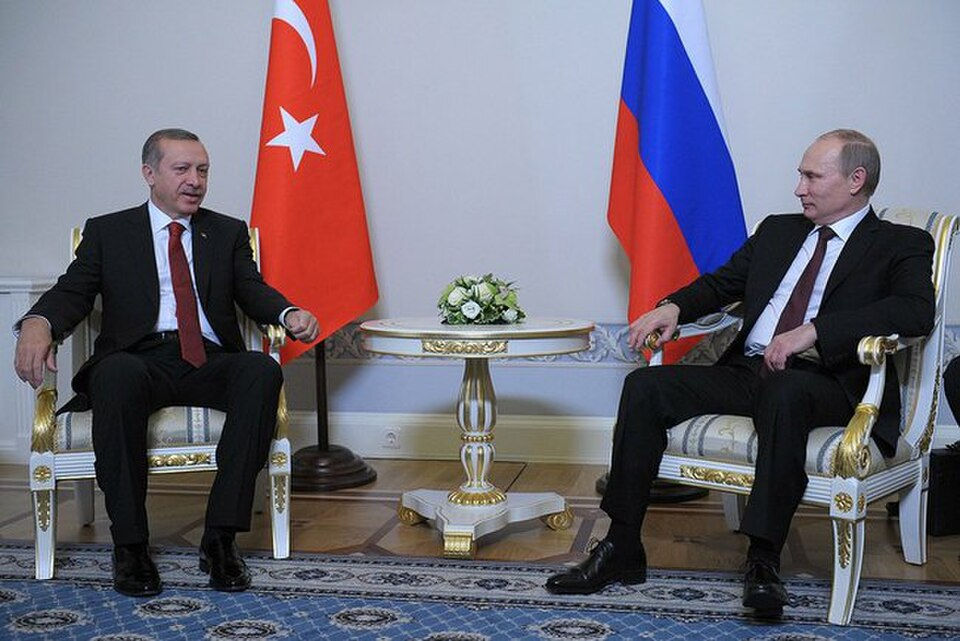
The other Board of Peace member that has raised skepticism for its involvement in the developing situation is our friend, Qatar. It need not be said why this is cause for concern, as Qatar’s relationship to Israel, particularly regarding its friendliness to Hamas, has been outlined earlier. What’s important is that Qatar, like Turkey, has self-serving interests in shaping the accomplishments of the Middle East. Both countries’ power and influence in the region (Turkey being a NATO member and Qatar’s wealth, among other things), give them the perfect position to manipulate post-war policies and governmental development within Gaza and an opportunity to further legitimize their anti-Israel sentiment through other means. Is the United States ignorant of these motives, or is there something else going on behind the scenes that puts Israel’s enemies to have a say in its future?
This does not even scratch the most distressing barrier, which is that Hamas refuses to disarm. Who would have thought. It still has the Gaza strip crushed under its iron fist. Therefore, the Israel Defense Forces cannot withdraw from the region. Doing so would be a dire security threat. So long as Hamas has even a shred of power, the Israeli military unfortunately has to stay put right where it is.
Besides this, it must be said that the ridiculousness of even entertaining the idea of any future for Arabs in Gaza is an understatement. Israel had unilaterally withdrawn from the Gaza Strip in 2005. The Gazans held elections in 2006 and Hamas came into power the following year. This is besides the numerous attempts to create a legitimate Arab state that exists next to Israel since before its reestablishment in 1948, all of which have come to nothing but endless terror and bloodshed. The question is not whether Israel should continue to try to allow such a state to exist, but whether there is any legitimacy on the Arabs’ behalf, and if they even want one at all. So why is the United States so keen on making sure everything goes smoothly, when there’s no question that it won’t? Besides a stake in the future of Gaza, who knows?
The United States is playing Russian Roulette. Every actor involved is a bullet in a gun that America is holding right up to its temple. Syria still can’t pull itself together, no thanks to Al-Sharaa. Qatar is having a ball meddling in the educational foundation of our society while playing house with terrorists. And the Iranian fiasco? Far from over. We’ve yet to see what’s to come and how much more damage both sides will do to each other. The Board of Peace is a lost cause, to say the least. The only entity that knows that for sure is Israel. What’s happening right now is a waiting game. Will the United States wake from its trance before it’s too late, or have the dominoes already begun to fall?
